

The Ultimate Guide to Handmade Shoes in Pakistan: A Legacy of Craftsmanship
In a world dominated by mass production and fleeting trends, there lies a realm where time-honored traditions and meticulous artistry prevail. This is the world of handmade shoes in Pakistan. More than just footwear, these creations are a testament to a rich cultural heritage, a narrative of generational skill passed down through centuries, and a symbol of unparalleled quality. From the ruggedly handsome Peshawari chappal to the intricately embroidered Multani khussa, each pair tells a story of its origin, its maker, and the soul of the land it comes from.
This comprehensive guide will take you on a journey into the heart of Pakistan’s artisan communities. We will explore the history that shaped these iconic designs, demystify the painstaking process of their creation, and provide you with the knowledge to identify and cherish authentic, handcrafted masterpieces. Whether you are a connoisseur of fine leather goods or a curious traveler seeking a tangible piece of Pakistani culture, prepare to step into a legacy of craftsmanship.
The Enduring Legacy of Handmade Shoes in Pakistan
The tradition of shoemaking in the regions that now constitute Pakistan is as old as the civilizations that flourished here. It’s a craft that has been shaped by conquerors, patronized by royalty, and perfected by generations of artisans. The story of handmade shoes in Pakistan is not merely about fashion; it’s a profound cultural narrative woven from threads of history, geography, and human ingenuity.
From Mughal Courts to Modern Wardrobes
The sophisticated artistry seen in many traditional Pakistani footwear styles, particularly the khussa, can be traced back to the opulent era of the Mughal Empire. The royals and nobles of that time were patrons of the finest crafts, and shoemaking was no exception. Artisans were commissioned to create lavishly embroidered slippers using gold and silver threads (‘zari’), precious gems, and the highest quality leather. These shoes were symbols of status and wealth, designed with distinctive curled toes. This imperial patronage elevated shoemaking to an art form, a legacy that the craftspeople of today proudly carry forward. While the materials might be more accessible now, the dedication to intricate detail and quality remains unchanged, allowing anyone to own a piece of this royal history.
“Each stitch tells a story, each piece of leather holds a memory. We don’t just make shoes; we keep our history alive.” – A master artisan from Lahore.
What Makes Pakistani Handmade Shoes Unique?
Several key factors distinguish handmade shoes in Pakistan from their mass-produced counterparts, making them a prized possession for those who value authenticity and quality.
- Genuine Leather Construction: The foundation of all high-quality Pakistani handmade shoes is genuine, full-grain leather. Typically sourced from cow, goat, or camel hide, this material is chosen for its durability, breathability, and ability to mold to the wearer’s foot over time, creating a custom fit.
- Generational Artistry: The skills required to create these shoes are not learned from a textbook. They are passed down from father to son, mother to daughter. This generational transfer of knowledge ensures that the techniques, no matter how minute, are preserved with authenticity.
- Hand-Stitched Durability: Unlike glued soles that fall apart, these shoes are meticulously hand-stitched. This process, often involving a technique known as ‘Charkha’, creates an incredibly strong bond between the upper and the sole, ensuring longevity that mass-produced footwear cannot match.
- Cultural Significance: Wearing a Peshawari chappal or a Multani khussa is an expression of cultural identity. These are not just accessories; they are integral parts of traditional attire for weddings, festivals, and daily life, imbued with cultural pride.
The Epicenters of Shoemaking: A Journey Through Pakistan’s Craft Hubs
While the art of shoemaking is practiced across the country, certain cities have become synonymous with specific styles, acting as bastions of this traditional craft. Exploring these hubs is essential to understanding the diversity within the world of handmade shoes in Pakistan.
Peshawar: The Birthplace of the Iconic Peshawari Chappal
A Symbol of Pashtun Heritage
Peshawar, the capital of Khyber Pakhtunkhwa, is the undisputed home of the Peshawari chappal. This iconic open-toed sandal is recognized globally for its rugged elegance and comfort. Characterized by its two wide straps that cross over the foot and a supportive sole often made from truck tires, the chappal is a masterpiece of functional design. In the bustling lanes of Peshawar’s old city, particularly in Namak Mandi, you’ll find entire markets dedicated to this craft, where artisans work in small workshops, their hammers rhythmically beating leather into shape. The creation of these authentic handmade shoes in Pakistan is a sight to behold.
Multan: The Realm of the Intricate Khussa
Where Embroidery Meets Footwear
Multan, the “City of Saints” in Southern Punjab, is famous for its breathtakingly beautiful khussas. These closed-toe shoes are a canvas for artisans to display their mastery of embroidery. Using vibrant silk threads, beads, sequins, and mirrors, they create intricate floral and geometric patterns that are nothing short of wearable art. The Multani khussa is a staple at Pakistani weddings and festive occasions. The craftsmanship is so detailed that a single pair can take several days to complete, representing a pinnacle of the artistry found in handmade shoes in Pakistan.
Lahore: A Fusion of Traditional and Contemporary Styles
The Modern Face of a Timeless Craft
Lahore, the cultural heart of Pakistan, serves as a melting pot where tradition meets modernity. While you can find master artisans crafting classic khussas and chappals in the Walled City, Lahore is also where many modern designers are reinterpreting these styles for a contemporary audience. Here, you’ll find handmade leather loafers, oxfords, and boots that incorporate traditional techniques with modern aesthetics. This fusion makes Lahore a vital center for the evolution of the handmade shoes Pakistan industry, ensuring its relevance for future generations.
The Anatomy of a Masterpiece: How Handmade Shoes in Pakistan Are Crafted
The journey from a raw piece of hide to a finished shoe is a labor of love, precision, and immense skill. Understanding this process deepens one’s appreciation for the final product. Let’s break down the creation of typical handmade shoes in Pakistan.
Step 1: The Soul of the Shoe – Selecting the Finest Leather
Everything begins with the selection of leather. Master artisans possess an innate ability to judge the quality of a hide by its feel, thickness, and grain. For the upper part of the shoe, a softer, more pliable leather like goat or sheepskin is often used. For the sole, a tougher, more durable cow or buffalo hide is preferred. The leather is then treated and tanned, often using traditional, natural methods, to prepare it for cutting.
Step 2: The Art of the Pattern – Cutting and Shaping
Using patterns that have been perfected over generations, the artisan carefully cuts the various pieces of the shoe from the prepared leather. This step, known as ‘clicking’, requires a steady hand and an eye for precision, as even a minor miscalculation can ruin the entire piece. Each component—the upper, the vamp, the sole, the insole—is cut with deliberate care.
Step 3: The Weaver’s Hand – Intricate Stitching and ‘Charkha’
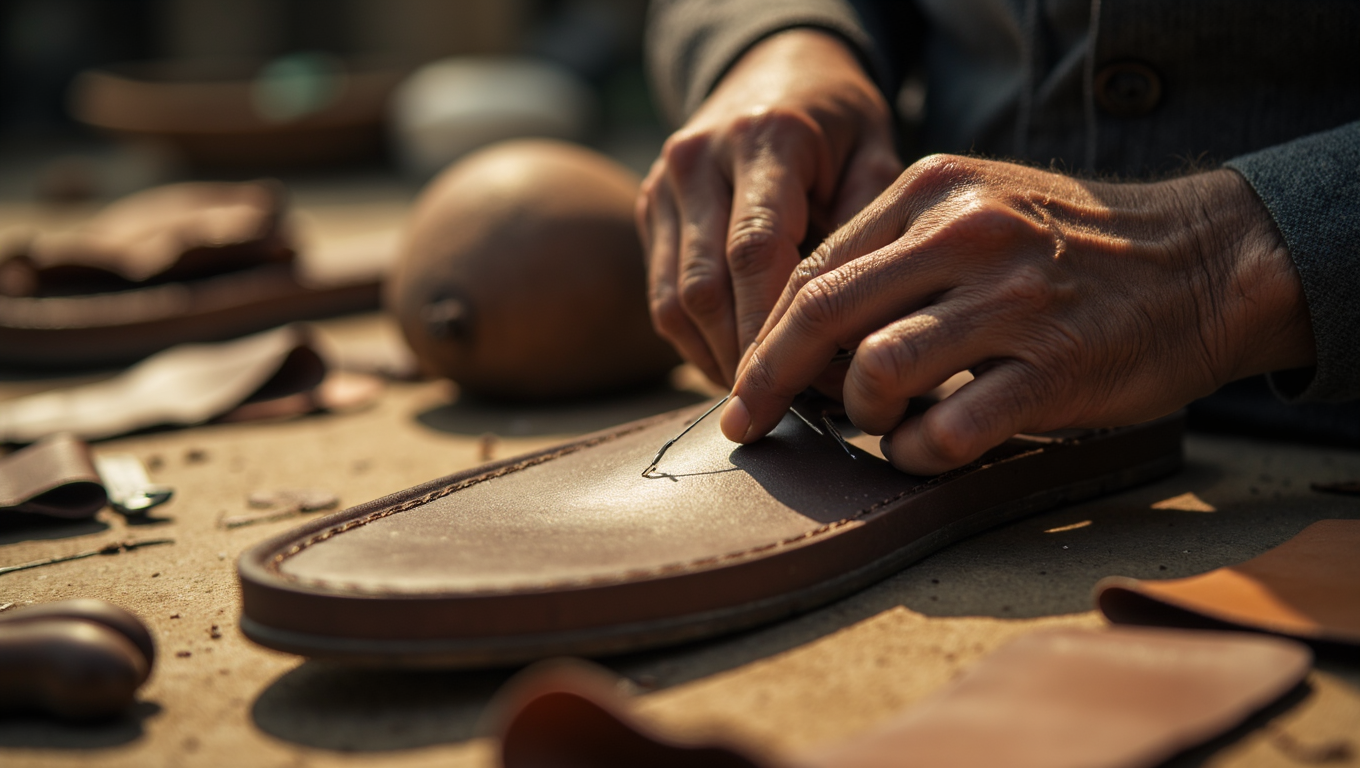
This is where the magic truly happens. The different pieces are stitched together, entirely by hand. For shoes like the Peshawari chappal, a thick, waxed thread is used to create incredibly strong seams. The sole is often attached using the ‘Charkha’ technique, where the artisan uses an awl and two needles to create a durable lockstitch that binds the upper to the sole. For khussas, this is also the stage where elaborate embroidery is painstakingly added before the shoe is fully assembled.
Step 4: The Final Form – Lasting and Finishing Touches
The stitched upper is stretched over a ‘last’—a foot-shaped mold—to give the shoe its final shape. It is hammered and molded until it fits the last perfectly. Once shaped, the shoe is left to set. Finally, it undergoes finishing touches: the leather is polished, the edges are burnished, and any final decorative elements are added. The result is a pair of handmade shoes from Pakistan that is not just beautiful but also structurally superior.
A Buyer’s Guide: How to Identify and Purchase Authentic Handmade Shoes from Pakistan
With a growing market, it’s important to know how to distinguish authentic, high-quality footwear from inferior imitations. Whether you’re shopping in a bustling bazaar or online, these tips will help you make an informed purchase.
What Should You Look for in Quality Handmade Footwear?
Use this checklist to assess the quality of a pair of handmade shoes in Pakistan:
| Quality Marker | What to Look For |
|---|---|
| The Leather | Look for the rich, natural smell of real leather. The grain should have minor imperfections, a sign of genuine hide. It should feel supple, not stiff or plastic-like. |
| The Stitching | Examine the stitches, especially where the sole meets the upper. They should be tight, uniform, and consistent. Uneven or loose stitching is a red flag. |
| The Sole | Authentic Peshawari chappals often use durable recycled tire soles. High-quality khussas will have a thick, stitched leather sole. The insole should also be made of leather for breathability. |
| Symmetry & Finish | While handmade items have character, a quality pair should be symmetrical. The left and right shoes should be a mirror image. The edges should be smooth and well-polished. |
Navigating the Market: Online vs. In-Person Shopping
Buying in person in Pakistan allows you to apply the sensory tests mentioned above. However, for international buyers, reputable online stores are a fantastic option. When buying handmade shoes from Pakistan online, look for brands that provide detailed product descriptions, high-resolution photos from multiple angles, clear information about the materials used, and customer reviews. Brands like Rustom Footwear are dedicated to bringing this authentic craftsmanship to a global audience with a commitment to quality.
Caring for Your Investment: How to Maintain Your Pakistani Handmade Shoes
With proper care, your handmade leather shoes can last for years, becoming more comfortable and characterful with age. Follow these simple steps:
- Keep Them Dry: Avoid wearing your leather shoes in heavy rain. If they do get wet, stuff them with newspaper and let them air dry naturally, away from direct heat.
- Clean Regularly: Wipe off dust and dirt with a soft, damp cloth after each wear.
- Condition the Leather: Apply a quality leather conditioner every few months to keep the leather moisturized and prevent it from cracking.
- Store Properly: Store your shoes in a cool, dry place, preferably in a cloth bag to allow them to breathe.
Conclusion: More Than Just Footwear, A Cultural Heritage
The world of handmade shoes in Pakistan offers a refreshing antidote to the disposable nature of modern fashion. Each pair is an investment in durability, a vote for sustainable craftsmanship, and a celebration of a cultural legacy. By choosing to wear these creations, you are not just acquiring a unique and stylish piece of footwear; you are helping to sustain a community of artisans and preserving an art form for generations to come. It is a tradition of quality and soul, stitched into every fiber, ready to walk with you on your journey.
Frequently Asked Questions (FAQ) about Handmade Shoes in Pakistan
1. What are the most famous types of handmade shoes from Pakistan?
The two most famous types are the Peshawari chappal, an open-toed leather sandal known for its comfort and durability, originating from Peshawar; and the Multani khussa, a closed-toe slipper celebrated for its intricate hand-embroidery, originating from Multan.
2. Are handmade Pakistani shoes comfortable for daily wear?
Yes, absolutely. Because they are made from genuine leather, they are breathable and mold to the shape of your foot over time, creating a custom fit. Peshawari chappals, in particular, are renowned for their comfort and are worn daily by millions.
3. How can I determine my size when buying handmade shoes from Pakistan online?
Most reputable online sellers provide a detailed sizing chart that correlates their local sizes with standard US, UK, and EU sizes. It is best to measure your foot from heel to toe and compare it with the chart provided by the seller for the most accurate fit.
4. Is the leather used in these shoes ethically sourced?
The leather used in traditional handmade shoes in Pakistan is typically a byproduct of the local meat industry. Artisans source hides from local tanneries, making use of a material that would otherwise go to waste. This makes it a relatively sustainable aspect of the craft.
5. Why are some Peshawari chappals made with tire soles?
The use of recycled truck tires for the soles is a traditional and ingenious innovation. Tire rubber is incredibly durable, long-lasting, and provides excellent grip, making the chappals perfectly suited for rugged terrain and extensive walking. It is a hallmark of authentic, functional design.
6. Can I get custom-made shoes from Pakistani artisans?
Yes, many artisans and brands, including Rustom Footwear, specialize in custom orders. This is one of the biggest advantages of the craft. You can often specify your exact size, choose the leather color, and even request specific embroidery designs to create a truly one-of-a-kind pair of handmade shoes from Pakistan.