

Pakistani Handmade Chappals: Top Trends for Women 2025
1. The Enduring Allure of Handmade Craftsmanship
In a world of fast fashion and mass production, there is a growing, powerful movement towards authenticity, craftsmanship, and heritage. At the heart of this movement lies the Pakistani handmade chappal, a timeless piece of footwear that weaves together centuries of tradition with contemporary style. Originating from the skilled hands of artisans in regions like Peshawar, this footwear is more than just an accessory; it’s a cultural emblem. [3] The history of these chappals is rich, initially designed for the rugged terrains of the Khyber Pakhtunkhwa region for Pashtun tribesmen, they have evolved into a symbol of elegance and national pride. [4] As we look towards 2025, the demand for authentic, handcrafted pieces continues to surge, making the handmade chappal for women in Pakistan not just a trend, but a celebration of artistry and individuality.
2. Why Handmade Chappals are a Wardrobe Staple for 2025
Investing in a pair of Pakistani handmade chappals goes beyond fashion; it’s about embracing comfort, durability, and ethical production. Each pair tells a story, carrying the unique touch of its creator. Unlike machine-made alternatives, handmade chappals are often crafted from high-quality, genuine leather that breathes and molds to your foot over time, offering unparalleled comfort. [4] This focus on quality materials and meticulous construction means they are built to last. Furthermore, choosing handmade supports local artisans and helps preserve generational skills that are the backbone of Pakistan’s cultural heritage. [4] In 2025, the conscious consumer is looking for style with substance, and the handmade chappal for women in Pakistan perfectly fits this narrative.
3. Top 7 Pakistani Handmade Chappal Trends for Women in 2025
As we step into 2025, the world of Pakistani handmade chappals is buzzing with innovation. Designers are blending age-old techniques with modern aesthetics to create footwear that is both unique and versatile. Here are the top trends you need to know about.
3.1. The Minimalist Muse: Architectural Shapes & Clean Lines
Simplicity makes a bold statement in 2025. This trend moves away from heavy embellishments and focuses on the chappal’s form. Think clean lines, geometric cuts, and modern silhouettes like the square-toe design. [2] These chappals are perfect for the modern woman who appreciates understated elegance. Crafted from smooth, high-quality leather in neutral tones like tan, black, and white, they are incredibly versatile, pairing effortlessly with both traditional shalwar kameez and contemporary Western wear like linen trousers or a minimalist dress. [2]
3.2. Earthly Elegance: Sustainable Materials & Natural Dyes
Sustainability is more than a buzzword; it’s a core fashion principle for 2025. This trend sees artisans using eco-friendly materials such as cork, jute, and recycled rubber for soles, paired with leather tanned using natural, vegetable-based dyes. This not only reduces the environmental impact but also gives the chappals a beautiful, earthy aesthetic. [4] These pieces appeal to the ethically conscious buyer and offer a unique, organic texture that is both stylish and responsible.
3.3. Digital Dreams: Vibrant Printed Leather
Technology meets tradition with the rise of digitally printed leather chappals. This technique allows for intricate, vibrant patterns—from modern abstract art to delicate floral motifs—to be printed directly onto the leather with stunning clarity. [4] This trend is perfect for those who want to add a pop of color and personality to their outfits. It’s a fresh, contemporary take on the decorated chappal, offering endless design possibilities while maintaining the comfort and quality of handmade footwear. [4]
3.4. Heirloom Embellishments: Modern Embroidery & Beadwork
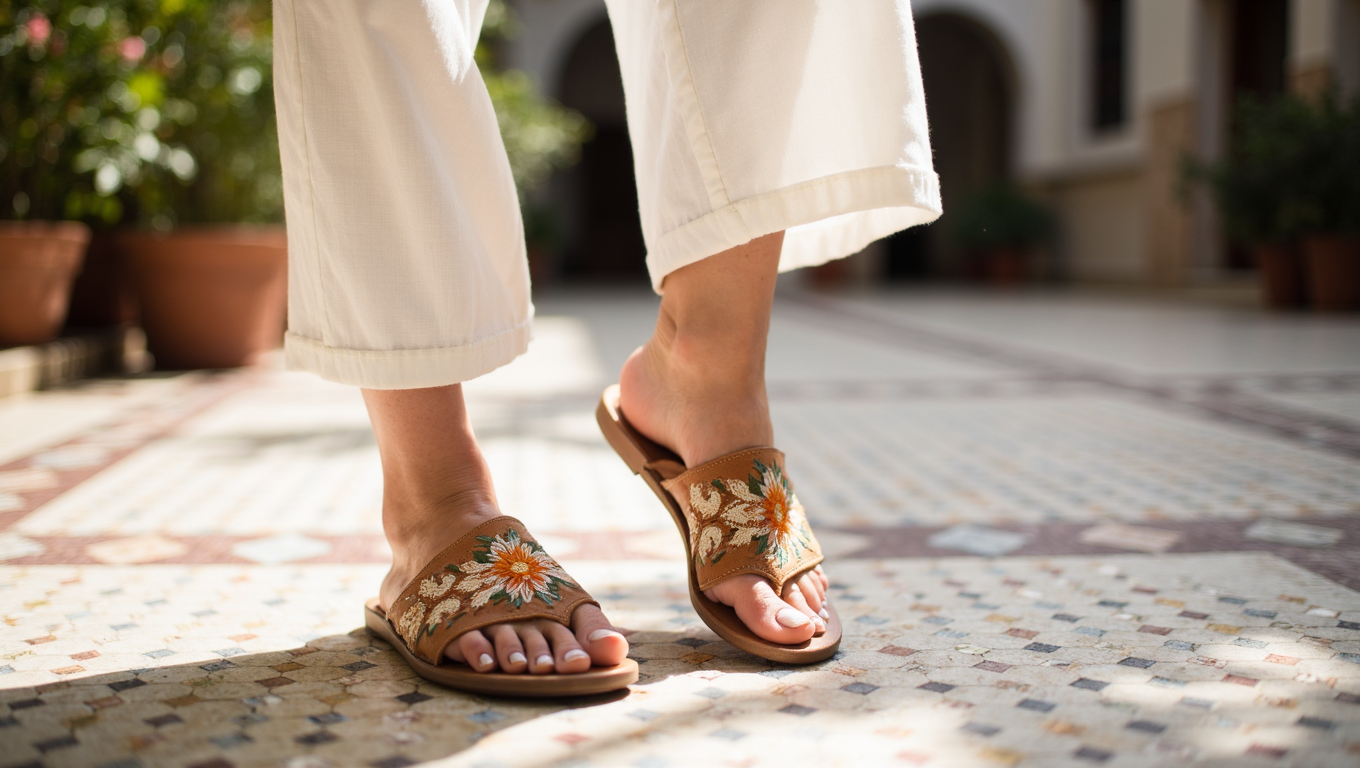
Embroidery is a timeless feature of Pakistani handmade chappals, but in 2025, it gets a modern update. [4] Artisans are experimenting with contemporary floral patterns, geometric threadwork, and a more subtle use of sequins and beads. The focus is on intricate, high-quality craftsmanship rather than overwhelming sparkle. This trend creates “statement” pieces that can elevate a simple outfit, making them perfect for festive occasions, weddings, or even a chic evening out. [5]
3.5. Metallic Vogue: Liquid Shine & Subtle Accents
A touch of glamour is always in style. The metallic trend for 2025 is less about overt glitter and more about sophisticated shine. Expect to see chappals crafted from soft leathers with a liquid-gold or brushed-silver finish. For a more understated look, this trend also appears in the form of subtle metallic accents, such as a thin, elegant strap or delicate hardware. These chappals are perfect for adding a touch of festive elegance to any ensemble, day or night.
3.6. Texture Story: Woven & Braided Leather
Texture adds depth and interest to footwear, and this trend is all about tactile appeal. Artisans are using intricate weaving and braiding techniques to create stunning patterns on the chappal’s upper. This not only looks beautiful but also adds a unique dimension and flexibility to the shoe. Often seen in rich, natural leather tones, these textured chappals are a testament to the artisan’s skill and offer a sophisticated, bohemian vibe.
3.7. The Fusion Step: Kolhapuri-Peshawari Hybrids
Celebrating the rich craft heritage of the subcontinent, 2025 sees the rise of beautiful hybrid designs. The most popular is the fusion of the sturdy, iconic Peshawari chappal with the delicate, ornate form of the Kolhapuri. This results in footwear that carries the durability and comfort of the Peshawari with the decorative T-strap and toe-ring details of the Kolhapuri, creating a truly unique and stylish option for women.
4. How to Choose Your Perfect Handmade Chappal
With so many beautiful options, finding the right pair can be exciting. Consider these factors:
- Occasion: Are you looking for an everyday staple or a festive statement piece? Minimalist or printed designs are great for daily wear, while embroidered and metallic styles are perfect for special events. [2]
- Material: Genuine leather is the hallmark of quality. It’s durable, breathable, and comfortable. Check for soft leather uppers and a well-constructed sole—often made of tyre rubber for excellent grip. [3]
- Fit: A well-fitted chappal is key to comfort. Ensure your foot sits comfortably within the sole’s perimeter and the straps are snug but not tight. Remember that leather will slightly stretch and adapt to your foot shape over time.
5. A Style Guide: Wearing Your Chappals with Flair
The versatility of the Pakistani handmade chappal is one of its greatest strengths. Here’s how to style them for any look:
- The Traditionalist: The most classic pairing is with a shalwar kameez or kurta. Match the color of your chappals to your outfit for a cohesive look, or choose a contrasting color to make a statement. [2]
- The Modernist: Pair your chappals with slim-fit jeans (rolled up at the ankle to show off the footwear) and a simple t-shirt or crisp button-down shirt. This creates a chic, fusion look that is effortlessly cool. [2]
- The Bohemian: Style textured or embroidered chappals with a flowing maxi dress or skirt for a relaxed, bohemian-inspired ensemble.
6. The Soul of the Shoe: A Look into the Craftsmanship
The creation of a handmade chappal is an art form passed down through generations. The process begins with the careful selection of high-quality leather. An artisan then meticulously cuts the leather pieces, hand-stitching the upper straps together. [6] The sole, often made from recycled tyres for durability, is then attached. Every step, from the cutting to the final polish, is done by hand, ensuring each pair has a unique character and superior quality. [6] This dedication to craftsmanship is what makes each pair of handmade chappal for women in Pakistan a wearable piece of art.
7. Preserving Beauty: Caring for Your Chappals
To ensure your handmade chappals last for years, proper care is essential. Keep them clean by wiping them with a soft, damp cloth. For leather chappals, use a quality leather conditioner periodically to keep the material soft and prevent cracking. Store them in a cool, dry place away from direct sunlight. Regularly polishing your chappals will maintain their shine and protect them from the elements. [2]
8. Conclusion: Walk the Talk of Tradition and Trend
The Pakistani handmade chappal is more than just footwear; it is a powerful symbol of cultural heritage, timeless style, and impeccable craftsmanship. The trends for 2025 demonstrate a beautiful evolution, blending rich tradition with contemporary design sensibilities. Whether you are drawn to minimalist elegance, vibrant prints, or sustainable choices, there is a handmade chappal waiting to tell its story with every step you take. By choosing handmade, you are not only elevating your personal style but also supporting a legacy of artistry that deserves to be celebrated worldwide.
9. Frequently Asked Questions (FAQ)
Q1: Are Pakistani handmade chappals comfortable for all-day wear?
A: Absolutely. High-quality handmade chappals are designed for comfort. They are typically made from soft, genuine leather that breathes and molds to the shape of your foot, providing a custom-like fit over time. The soles are often durable yet flexible, making them suitable for daily wear. [2]
Q2: How can I tell if a chappal is made from real leather?
A: Real leather has a distinct, slightly earthy smell, whereas faux leather may have a plastic or chemical odor. Genuine leather also has minor imperfections and a unique grain pattern. It should feel soft and flexible, not stiff like plastic.
Q3: Can I wear Peshawari chappals with formal Western wear like a suit?
A: Yes, this has become a very chic fusion look. To style chappals with a suit, opt for a sleek, minimalist pair in a classic color like black or dark brown. Ensure they are well-polished and clean to maintain a sophisticated appearance. [2]
Q4: What is the main difference between Peshawari and Kolhapuri chappals?
A: While both are traditional handmade sandals, the Peshawari chappal is known for its open-toe design with thick, crossed leather straps and a sturdy, often tyre-rubber sole, originating from Peshawar. The Kolhapuri, from India, typically features a distinctive T-strap construction and often includes a toe loop.
Q5: How do I support ethical production when buying a handmade chappal for women in Pakistan?
A: The best way is to purchase from reputable brands and artisan collectives that are transparent about their supply chain. Buying directly from brands that highlight their craftsmen and their stories, like Rustam Footwear, ensures that your purchase supports fair wages and the preservation of this valuable craft. [4]