

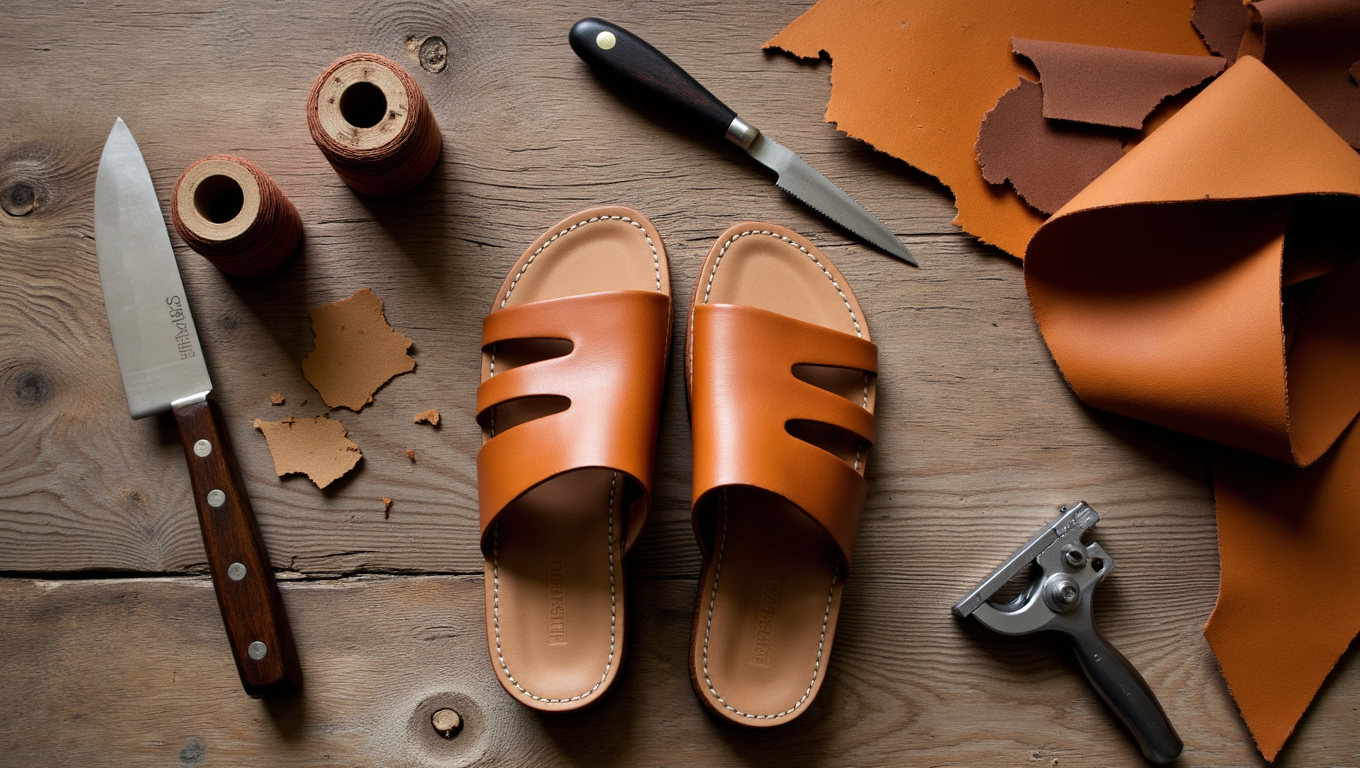
The Artisan’s Journey: How to Make Handmade Shoes and Sandals From Scratch
The Soul of the Craft: Why Make Your Own Footwear?
Before we cut our first piece of leather, it’s worth exploring the ‘why’. Why learn how to make handmade shoes and sandals in an age of convenience? The reasons are as unique as the creations themselves. For some, it’s about achieving an unparalleled custom fit, molding the shoe to the exact contours of their feet for ultimate comfort. For others, it’s a rebellion against fast fashion, a commitment to creating durable, repairable items that last a lifetime. It’s an opportunity to control every material, choosing sustainable leathers and eco-friendly components. [Source Needed] Above all, it’s an act of profound creativity—a chance to transform a raw hide into a piece of wearable art that carries your personal story with every step.
Understanding the Anatomy of a Shoe: The Core Components
To master the craft, you must first speak the language. Every shoe, from the simplest sandal to the most complex boot, is constructed from a few key components. Understanding these parts is fundamental to the process of learning how to make handmade shoes and sandals.
- The Last: This is the 3D form around which a shoe is made. [5] It dictates the shoe’s size, shape, and heel height. Think of it as the sculptor’s armature or a dressmaker’s mannequin for the foot. [5]
- The Upper: This is the entire part of the shoe that covers the top of the foot. [5] It can be a simple strap on a sandal or a complex, multi-piece construction for a boot.
- The Insole: The foundational layer inside the shoe that the foot rests upon. It’s the component to which the upper is attached during the lasting process.
- The Outsole: The durable outer layer of the sole that makes contact with the ground. This can be made of leather, rubber, or other materials.
- The Heel: A separate component attached to the back of the outsole to provide lift and support.
- Stiffeners (Toe Puff & Heel Counter): These are hidden components inserted into the upper at the toe and heel area to provide structure, support, and shape retention. [5]
The Shoemaker’s Toolkit: Equipping Your Workshop
Gathering the right tools is the first practical step in your journey. While professional cordwainers have extensive workshops, you can start with a modest set of high-quality hand tools. Here’s a breakdown of the essentials for anyone serious about learning how to make handmade shoes and sandals.
Essential Cutting & Pattern Tools:
- Utility Knife or Shoemaker’s Knife: A sharp, heavy-duty knife is your primary tool for cutting leather and soling materials. [3]
- Cutting Mat: A self-healing mat to protect your work surface. [1]
- Ruler and Measuring Tape: For precise measurements.
- Scratch Awl: A pointed tool for marking patterns on leather and preparing surfaces for glue. [1]
Assembly & Lasting Tools:
- Shoemaker’s Hammer: Used for everything from tapping down seams to setting eyelets. A ball-peen hammer is a good starting point. [1]
- Lasting Pliers: A specialized tool with a built-in hammerhead, designed for stretching and pulling the leather upper tightly over the last.
- Shoe Glue / Contact Cement: A strong, solvent-based adhesive is crucial for bonding leather and sole layers. [3]
- Leather Hole Punch: A rotary punch for making holes for laces or buckle straps. [1]
Choosing Your Canvas: A Guide to Materials
The materials you choose will define the character, durability, and comfort of your footwear. The world of leather and soling can be vast, but here are the key players.
- Vegetable-Tanned Leather: This is the traditional choice for shoemaking. It’s firm, molds beautifully to the foot over time, and is ideal for insoles, outsoles, and sturdy uppers. A medium weight (4-6oz) is great for sandal straps, while a heavier weight (8-10oz) is perfect for soles. [1]
- Chrome-Tanned Leather: This leather is softer, more flexible, and comes in a huge variety of colors and finishes. It’s excellent for comfortable shoe uppers that require less break-in time.
- Rubber Soling Sheets: For sandals and casual shoes, rubber soling offers excellent grip, flexibility, and durability. [3]
- Leather Laces & Hardware: Buckles, eyelets, and quality laces provide the finishing functional details.
For your first project, starting with vegetable-tanned leather is highly recommended. Its forgiving nature and structural integrity make it an excellent teacher.
Part 1: How to Make Handmade Sandals (A Perfect Beginner’s Project)
Sandals are the ideal entry point into the world of shoemaking. The process is straightforward, requires fewer specialized tools, and provides a quick, satisfying result. This section is a detailed tutorial on how to make handmade shoes and sandals, starting with the basics.
Step 1: Design and Pattern Making
The journey begins with a design. Start by sketching the sandal you envision. Once you have a concept, it’s time to create a pattern. Place your foot on a piece of paper or cardboard and trace its outline carefully. This will be your sole pattern. Add about 1/4 inch (or 5-6mm) around the tracing to create a margin. For the straps, you can cut strips of paper and drape them over your foot to determine the perfect placement, length, and width. [1, 3] This hands-on approach ensures your pattern is tailored specifically to you. [1]
Step 2: Cutting Your Components
With your paper patterns finalized, it’s time to move to the leather. Lay your patterns on the leather and rubber soling material. Use the scratch awl to trace the patterns onto the leather. For the sole, you’ll need one leather insole and one rubber outsole per foot. Remember to flip your patterns for the left and right foot to create a mirrored pair! [3] Place the leather on your cutting mat and use your sharp knife to make steady, confident cuts. Take your time—precision here is key.
Step 3: Assembling the Upper Straps
Before attaching anything to the sole, prepare your straps. This might involve punching holes for a buckle, skiving (thinning) the edges for a more refined look, or pre-stitching any decorative elements. If your design has overlapping leather pieces, now is the time to glue and stitch them together.
Step 4: Marking, Slotting, and Securing the Straps
Place your leather insole on a flat surface and position your assembled straps according to your design. Mark the points where the ends of the straps will pass through the insole. Use your knife to cut small slits or “slots” at these marks. The ends of the straps will be threaded through these slots to the underside of the insole. Before gluing, use your awl to heavily scratch the surfaces of both the strap ends and the corresponding areas on the insole’s underside. This “roughing up” creates a much stronger bond. [1] Apply contact cement to both surfaces, let it dry to a tack, and then press the strap ends firmly into place. [1]
Step 5: Attaching the Sole
With the straps securely glued to the bottom of your insole, it’s time to attach the outsole. Apply contact cement to the entire underside of the insole (covering the strap ends) and to the top of your rubber outsole. Allow both surfaces to dry according to the manufacturer’s instructions (usually 10-20 minutes). Carefully align the two pieces, starting from one end, and press them together firmly. Once they touch, the bond is instant, so precision is crucial. Use your hammer to tap all over the sole to ensure a complete and secure bond.
Step 6: Finishing Your Masterpiece
The final step is to trim and finish the edges. Use your sharp knife to carefully trim the excess outsole material flush with the leather insole. For a professional finish, sand the edge of the sole until it’s smooth and uniform. You can then use a tool called an edge beveler to round the leather edge, and apply beeswax or a special gum to burnish it to a smooth, sealed shine. Add your laces or buckle, and your custom handmade sandals are ready to wear!
Part 2: How to Make Handmade Shoes (An Intermediate Guide)
Once you’ve mastered sandals, you may be ready for the more complex but deeply rewarding challenge of a closed shoe. This process introduces the shoe last, a critical tool for giving the shoe its three-dimensional shape. This guide provides a high-level overview of the steps involved, which build upon the skills you learned making sandals.
Step 1: The Crucial Role of the Shoe Last
Everything in shoemaking revolves around the last. [5] Your first step is to acquire a pair of lasts in your size and desired style. They come in various shapes for different toe styles and heel heights. The success of your shoe depends on how well you shape the upper around this form.
Step 2: Patterning Your Shoe Upper
This is where the process becomes truly three-dimensional. The standard method involves covering the last with masking tape, drawing your shoe design directly onto the tape, and then carefully cutting the tape off along your design lines. [2] This tape pattern is then flattened onto paper, “trued up” with design principles, and your final 2D pattern pieces for the upper are created.
Step 3: Cutting, Skiving, and Sewing the Upper
Using your new patterns, you will cut the leather pieces for your upper. An important step here is skiving, which is the process of thinning the edges of the leather where they will be joined or folded. This reduces bulk and allows for clean, flat seams. The upper pieces are then sewn together, typically with a heavy-duty sewing machine, to create the final, complete upper before it is mounted on the last.
Step 4: Lasting the Uppers
First, the leather insole is temporarily tacked to the bottom of the last. Then, the sewn upper is steamed to make the leather pliable and stretched over the last. This is the “lasting” process. Using lasting pliers, you meticulously pull and stretch the edge of the upper down and around the insole, securing it with glue and nails. This is a physically demanding process that requires patience to eliminate all wrinkles and properly shape the shoe to the last.
Step 5: Building the Foundation and Attaching the Sole
Before the outsole is attached, stiffeners for the toe (toe puff) and heel (heel counter) are inserted between the upper leather and the lining to provide structure. [5] The bottom of the shoe is then sanded flat. The outsole is then attached with contact cement and, for maximum durability, often stitched directly to the shoe using a technique like a Blake stitch or a Goodyear welt. Finally, the heel is attached, and the sock liner is inserted to cover the insole, providing a comfortable and finished interior. This intricate process is at the heart of learning how to make handmade shoes and sandals with professional results.
Beyond the Basics: Customization, Care, and Advanced Techniques
Your journey doesn’t end with the basic construction. The world of shoemaking is rich with opportunities for personalization. You can explore leather tooling to emboss custom patterns, use dyes and paints to create unique finishes, or experiment with exotic materials. Proper care is also essential. Regularly cleaning and conditioning your handmade leather shoes will ensure they develop a beautiful patina and last for decades. As your skills grow, you can delve into more advanced construction methods, each offering different benefits in durability, flexibility, and water resistance.
Conclusion: Walk Your Own Path
Learning how to make handmade shoes and sandals is more than just acquiring a new skill; it’s about reconnecting with a tradition of craftsmanship, quality, and self-sufficiency. It is a slow, deliberate, and deeply rewarding process that culminates in a product that is uniquely yours. From the simple elegance of a custom-fit sandal to the structured form of a hand-lasted shoe, every project is a step forward in your artisan’s journey. We hope this guide has illuminated the path and inspired you to take that first, crucial step. The tools are ready, the leather is waiting—it’s time to create.
Frequently Asked Questions (FAQ)
1. What are the most essential tools to start making handmade shoes?
To begin, you need a few key tools: a sharp utility or shoemaker’s knife, a self-healing cutting mat, a scratch awl for marking, a hammer, lasting pliers (for shoes), a leather hole punch, and strong contact cement. [1, 3] This basic kit allows you to complete a wide range of sandal and simple shoe projects.
2. Is it difficult to learn how to make handmade shoes and sandals?
Like any craft, it requires patience and practice, but it’s very achievable. Starting with a simple project like sandals is the best way to learn the fundamental skills of pattern making, cutting, and assembly. [5] Online tutorials, books, and workshops can provide excellent guidance as you progress to more complex shoe designs.
3. What is the best type of leather for beginners?
Vegetable-tanned leather is highly recommended for beginners. [1] It is firm, holds its shape well, is easy to cut and tool, and molds to the foot over time. A medium weight of 4-6 ounces is versatile enough for sandal straps and simple shoe uppers, making it an excellent starting point.
4. Do I absolutely need a shoe last to make shoes?
For making sandals, you do not need a shoe last. However, for any type of closed shoe (like loafers, boots, or oxfords), a shoe last is essential. [5] It provides the three-dimensional form necessary to properly shape the upper and create a functional, comfortable shoe.
5. How much does it cost to start making handmade shoes?
The initial investment can vary. A basic set of hand tools might cost between $100 to $200. The cost of materials like a side of leather can range from $80 to $200+, but it will be enough for several pairs. By starting with simple sandal projects, you can gradually build your tool collection as your skills and project complexity grow, making the initial outlay more manageable.