

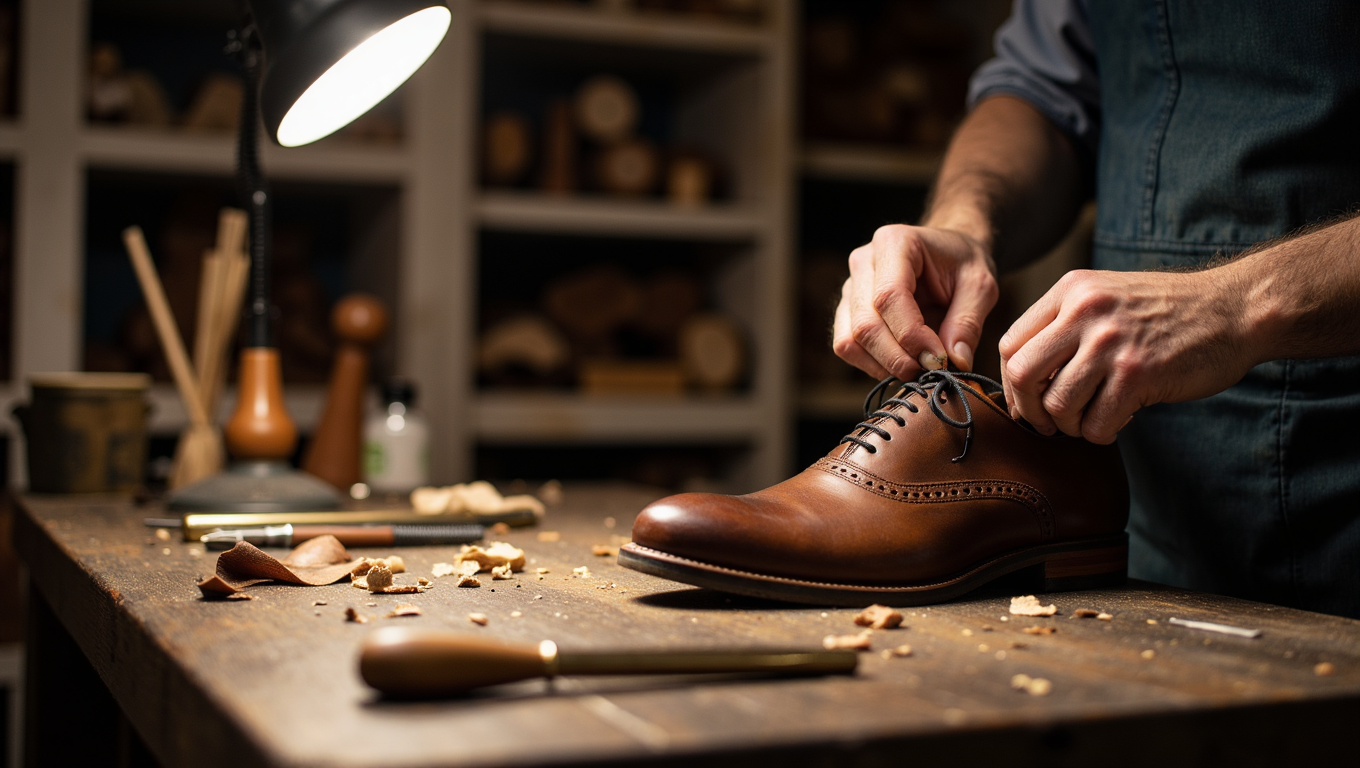
Are Leather Shoes Handmade? An In-Depth Look into the World of True Craftsmanship
1. Defining “Handmade”: What Does It Truly Mean?
The term “handmade” is one of the most powerful marketing buzzwords in fashion. However, its application can be misleading. A shoe might be labeled “handmade” if a single process, like attaching the sole, involves human intervention, even if the rest is done by machines. Therefore, understanding the query, “are leather shoes handmade?” requires a deeper look into the varying degrees of craftsmanship.
1.1. The Spectrum of “Handmade”
True artisanship exists on a spectrum. At one end, you have mass-produced shoes where machines handle almost every step. In the middle, you find “hand-welted” or “hand-finished” shoes, which combine machine efficiency with crucial steps performed by skilled artisans. For instance, a Goodyear welting machine might be used to stitch the welt, a process guided by a craftsperson’s expert hands. [1] This blend of man and machine produces a durable, high-quality shoe that is more accessible than a fully bespoke pair. At the far end of the spectrum lies the purist’s definition of handmade—a shoe created almost entirely with hand tools by a single artisan or a small team.
1.2. The Pinnacle: Bespoke Shoemaking
Bespoke is the ultimate answer to “are leather shoes handmade?” It is a resounding “yes.” A bespoke shoe is commissioned from scratch. [2] The process begins with a master shoemaker, or cordwainer, taking meticulous measurements of the client’s feet. From these measurements, a unique wooden last (a mold of the foot) is carved. Every single step that follows, from cutting the leather to the final polish, is performed by hand. This ensures a perfect, one-of-a-kind fit and a shoe that is a true work of art. The focus is not just on the product, but on the intimate, collaborative process between the client and the artisan.
2. The Art of the Craft: How Are Leather Shoes Handmade?
The creation of a handmade leather shoe is a symphony of skill, patience, and precision. It’s a process honed over centuries, transforming raw materials into a piece of functional art. While techniques vary, the core stages of crafting a high-quality handmade shoe remain timeless.
2.1. The Foundation: The Last
Everything starts with the last. This foot-shaped form dictates the shoe’s size, shape, and overall fit. [5] In bespoke shoemaking, the last is hand-carved from wood to the exact specifications of the wearer’s foot. For high-end ready-to-wear handmade shoes, manufacturers use meticulously designed lasts that have been refined over years to provide an exceptional fit for a standard foot shape. The quality of the last is paramount; it is the soul around which the shoe is built.
2.2. The Cut: Clicking the Leather
The artisan who cuts the leather is known as a “clicker.” Using patterns and an incredibly sharp knife, the clicker selects and cuts the best sections of the leather hide for the shoe’s upper. [3] This is a critical skill. The clicker must account for the leather’s stretch, grain, and any natural imperfections, ensuring that only the most pristine and durable parts are used. The term “clicking” comes from the sound the knife makes as it is expertly withdrawn from the leather.
“The quality of a shoe begins with the quality of its materials. In handmade footwear, premium, full-grain leather is not a luxury; it is a necessity.”
2.3. The Assembly: Closing the Upper
Once the individual pieces are cut, they are passed to the “closer.” This artisan’s job is to stitch the pieces together to form the complete upper of the shoe. This intricate work includes adding linings, punching brogue details, and creating the eyelets for the laces. Precision is vital, as the alignment of these pieces defines the shoe’s final appearance and structural integrity. In a genuinely handmade process, this is done with a needle and thread, a testament to the artisan’s steady hand and keen eye.
2.4. The Soul of the Shoe: Welting and Stitching
This is where many believe the true magic of handmade shoemaking lies. The upper is stretched over the last and attached to the insole. Then, a long strip of leather, known as the welt, is stitched to the upper and the insole. [1] This creates a strong, flexible, and water-resistant bond. The outsole is then stitched to the welt. Construction methods like the Goodyear welt or Blake stitch are hallmarks of high-quality shoemaking. This stitched construction, as opposed to the glued soles of cheaper shoes, is what makes handmade leather shoes so durable and allows them to be resoled multiple times, vastly extending their life. [2]
2.5. The Final Flourish: Finishing
The final stage involves building the heel, typically layer by layer from solid pieces of leather. [3] The sole edges are trimmed, sanded, and waxed to a smooth, elegant finish. The shoe is then cleaned, conditioned, and polished extensively to bring out the natural beauty of the leather. This meticulous finishing process is a signature of handmade quality and one of the clearest differentiators from mass-produced alternatives. For those who wonder are leather shoes handmade, the finishing process often provides the most visible clues.

3. Handmade vs. Machine-Made: A Tale of Two Philosophies
The debate between handmade and machine-made isn’t just about process; it’s about philosophy. Machine production prioritizes efficiency, consistency, and affordability. Artisan craftsmanship prioritizes quality, individuality, and longevity. When asking if are leather shoes handmade, you are essentially asking which philosophy a brand adheres to.
3.1. Material Quality: The Heart of the Matter
Handmade shoemakers build their reputation on the quality of their materials. They typically use full-grain or top-grain leather, the strongest and most durable parts of the hide. [2] These leathers breathe well and develop a beautiful patina over time. The internal components, like the insole and heel counter, are also made of leather, providing structure and breathability. [3] In contrast, machine-made shoes often use corrected-grain leather or synthetic materials to keep costs down. Soles are frequently made of rubber or plastic and are glued on, compromising breathability and durability. [5]
3.2. Durability and Longevity: An Investment Piece
The robust construction methods used in handmade shoes, such as hand-welting, mean they are built to last for decades, not just a season. [1] Because the sole is stitched on rather than glued, a skilled cobbler can easily replace it when it wears out. This resoleability is a cornerstone of sustainable, high-quality footwear. Machine-made shoes with cemented soles are often irreparable; once the sole wears through or detaches, the shoe is typically discarded. This makes a handmade pair a wiser long-term investment.
3.3. Comfort and Fit: A Shoe That Knows You
One of the most significant advantages of handmade leather shoes is their unparalleled comfort. The use of natural, breathable materials prevents moisture buildup. More importantly, a leather insole and cork footbed will gradually mold to the unique shape of your foot, creating a custom-like fit over time. [2] This is a level of personalized comfort that the standardized shapes and synthetic materials of mass-produced shoes cannot replicate.
3.4. Cost vs. Value: Understanding the Price Tag
There is no denying that handmade leather shoes come with a higher price tag. This cost reflects the countless hours of skilled labor, the premium materials, and the sheer artistry involved. [2] However, it’s crucial to distinguish between cost and value. A machine-made shoe may be cheaper initially, but if it needs to be replaced every year or two, the cumulative cost can exceed that of a single, durable handmade pair that lasts a lifetime. The value of a handmade shoe lies in its longevity, repairability, comfort, and timeless style.
4. How to Identify Genuinely Handmade Leather Shoes
With so many brands claiming the “handmade” label, how can a discerning customer spot the real deal? Here are a few key indicators to look for when determining if are leather shoes handmade.
4.1. Examine the Stitching
Look closely at the stitching on the welt and the sole. Hand-stitching, especially a hand-sewn Goodyear welt, will have a distinct, slightly irregular character. The stitches might not be perfectly uniform in the way a machine’s would be. This is not a flaw but a sign of human touch. The density and tension of the stitches are often superior to machine work. [1]
4.2. Inspect the Sole and Heel
A high-quality handmade shoe will almost always have a leather sole. Turn the shoe over and look for the channel where the sole has been stitched to the welt. The heel should be made of stacked leather layers, which you can often count. [3] A solid plastic or rubber heel with a thin leather veneer is a sign of a lower-quality, machine-made shoe.
4.3. Look for Subtle Imperfections
Perfection is the domain of machines. Artistry is the domain of humans. A truly handmade product will have character. This might manifest as a minuscule variation in the broguing pattern or a slight difference in the hand-burnished finish between the left and right shoe. These are not defects but signatures of the artisan’s craft, making each pair unique. [2]
5. Why Choose Handmade? The Tangible Benefits
The decision to invest in handmade leather shoes goes beyond mere aesthetics. It is a conscious choice for superior quality, sustainability, and personal comfort. Here is a summary of the compelling advantages:
- Unmatched Durability: With stitched soles and premium materials, they are built to last a lifetime.
- Supreme Comfort: Natural materials and molding footbeds provide a personalized fit.
- Timeless Style: Classic designs crafted with care transcend fleeting fashion trends.
- Sustainability: Their long lifespan and repairability reduce waste and combat the throwaway culture of fast fashion.
- Artisanal Value: Owning a pair is like owning a piece of art, supporting generations of craftsmanship.
6. Conclusion: The Enduring Legacy of Handmade Footwear
So, are leather shoes handmade? Yes, they are. True handmade leather shoes exist as a testament to the enduring power of human skill and dedication. While they represent a smaller fraction of the footwear market, their influence and importance are undeniable. They stand in direct opposition to the disposable nature of modern consumerism, offering a product that is not just worn, but experienced and cherished. Choosing a handmade leather shoe is an investment in unparalleled quality, a commitment to sustainable practices, and an appreciation for an art form that has shaped our history and continues to walk with us into the future.
7. Frequently Asked Questions (FAQ)
Are handmade leather shoes worth the high price?
Absolutely. While the initial cost is higher, their exceptional durability, potential for multiple resoles, and superior comfort provide better long-term value than multiple pairs of cheaper, machine-made shoes. [2] They are an investment in quality that can last for decades.
What is the difference between “handmade” and “hand-welted”?
“Handmade” implies that most or all of the shoe’s construction was done by hand. “Hand-welted” specifically refers to the process of stitching the welt (the leather strip connecting the upper to the sole) by hand. A shoe can be hand-welted but have other parts made by machine. Hand-welting is a key feature of high-quality handmade shoes. [1]
How long does it take to make a pair of handmade shoes?
The timeline varies greatly depending on the complexity and level of customization. A bespoke pair can take anywhere from 50 to 100 hours of skilled labor, spread out over several weeks or even months to allow the leather to rest and take the shape of the last properly. [Source Needed]
Can all handmade leather shoes be resoled?
The vast majority of genuinely handmade shoes, especially those with a Goodyear welt or Blake stitch construction, are designed to be resoled. This is a primary feature of their design and a major contributor to their longevity. Shoes with cemented or glued soles, typically machine-made, are generally not resoleable.
Why do handmade shoes use leather for the soles?
Leather soles are the traditional and often preferred choice for high-end dress shoes because they are highly breathable, durable, and mold to the foot for superior comfort. [5] While rubber soles offer better grip in wet conditions, leather provides a more elegant profile and a classic feel that is synonymous with quality craftsmanship.